Click on any image to enter the lightbox
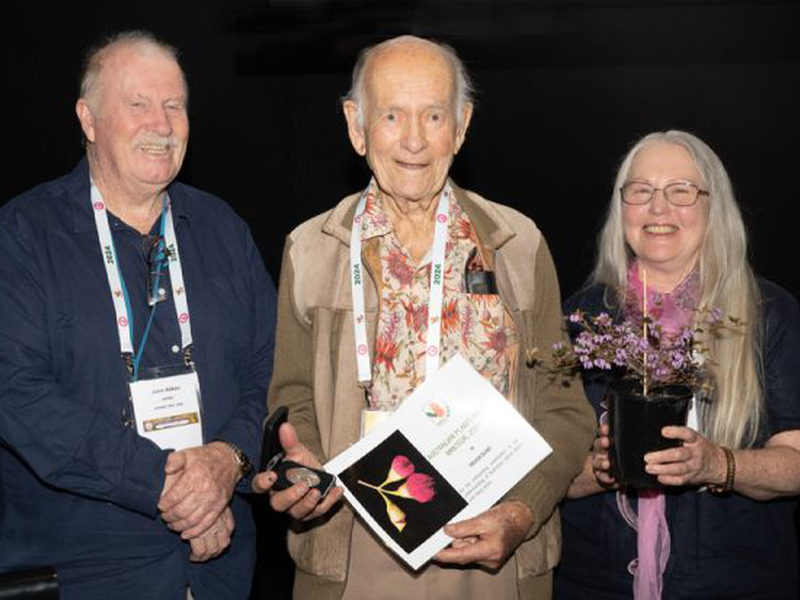
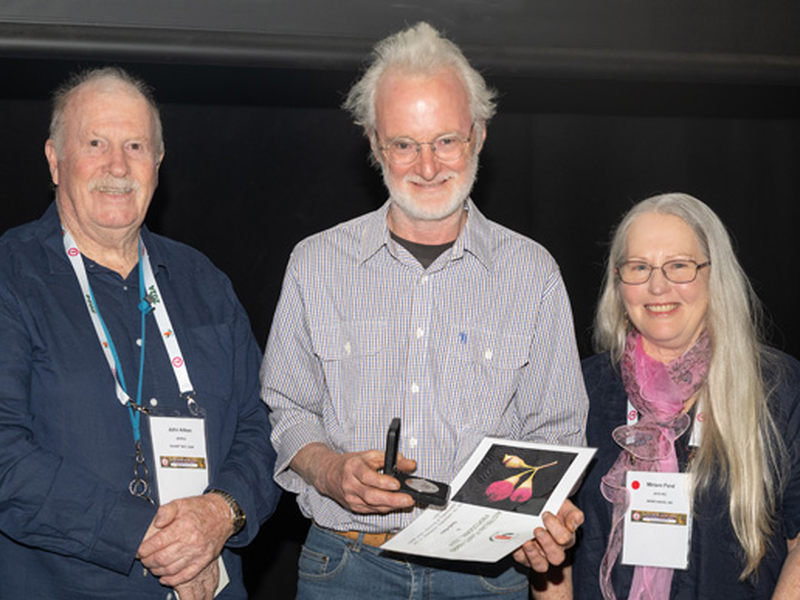
ANPSA awards to be presented in Alice Springs on August 26, 2026.
Dr Hilary Pearl, Dr Noushka Reiter and Maya Harrison have been announced as the 2026 winners of the prestigious Australian Native Plants Awards.
These coveted awards are presented every two years by the Australian Native Plant Society (Australia) [ANPSA] to people who have made an outstanding contribution to the knowledge of Australian plants. Winners are chosen in two categories: professional and amateur.
The professional award this year is presented to two recipients: Sunshine Coast heathland plant specialist Dr Hilary Pearl, and Dr Noushka Reiter, who runs the world’s most successful orchid conservation program, based in Melbourne.
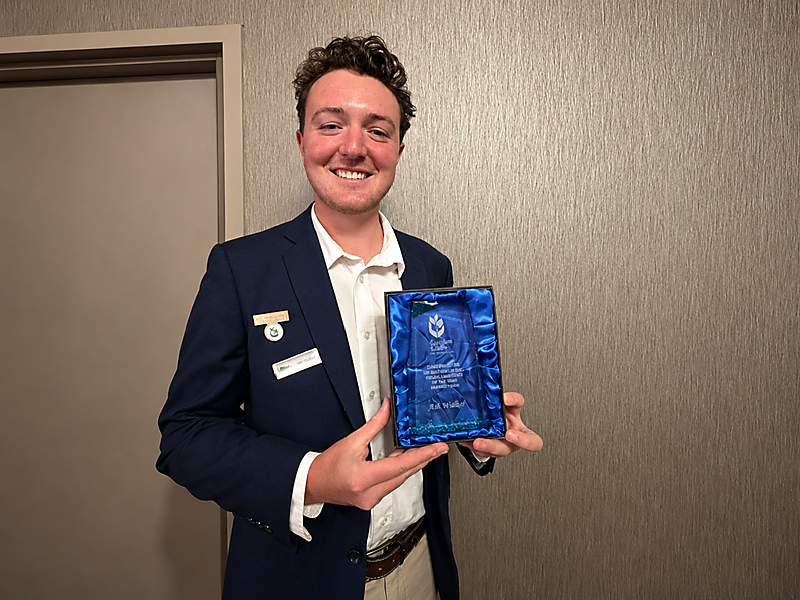
The amateur award is presented to environmentalist, photographer, botanical artist and teacher Maya Harrison of Mackay, Queensland.
Dr Noushka Reiter’s career is focussed on threatened species, and her work has seen the survival odds improve for more than 100 different plants. The Orchid Conservation Program that she leads at the Royal Botanic Gardens of Victoria is the most successful globally, in terms of successful reintroduction of plants into the wild.
Noushka says her interest in threatened flora started with her Honours. “I looked at threatened flora in the Grampians and its susceptibility to Phytophthora – it gave me a taste of working with threatened species.”
For her PhD she studied the Grampians’ rare pincushion lily, Boyra mirabilis, looking at its pollinators, genetic diversity and associations with mycorrhizal fungi in the soil. “It was hard to work with but also fascinating,” she says. This has proved true of much of her work since then, as research into threatened plants involves looking at the broader ecosystems in which they exist – their pollinators and the associations the plants have with soil-borne fungi or bacteria. She says orchids especially “are reliant on so many other factors in the environment in order to flourish and grow”.
Of the1800 species of orchids in Australia, about 17% are listed Federally as endangered.
After her PhD she worked in the Wimmera for seven years, looking at propagation techniques and surveying for threatened species, before the Orchid Conservation Program moved in 2015 to the Royal Botanic Gardens Victoria (Cranbourne site), where Noushka helped set up (and raise funds for) a laboratory in an old demountable to continue the research. Since then, the program has developed an ex-situ collection of more than 30,000 plants from 220 species, with 90 species never having been propagated before.
As well as the orchid conservation program, she also leads the Preventing Extinction of Victoria’s Threatened Flora Program.
“There are well over 1000 species of flora in Victoria alone that are threatened with extinction,” Noushka says. “I’ve been fortunate to work with about 100 in a meaningful way. As far as conservation is concerned, it’s those initial steps that need to be done for our threatened flora – understanding their ecology, establishing ex situ collections, getting seed into seedbank and getting plants back into the bush – and, importantly, involving the community so those populations have guardians when they’re out there.
“At the moment, if we stop, many of these species are not going to be around – so it’s rewarding and heartbreaking.”
The heartbreak comes from knowing that not all species can be saved: “Some are down to one or two plants and so reintroduction is not viable; the seed viability is so low.
“For others, the habitat is so destroyed it’s not suitable for supporting the pollinators or plants either – that happens a lot on the VVP [Victorian Volcanic Plain]. It’s very challenging in some of those habitats where they have been so neglected.”
Through the program, about 25 species of threatened flora have been successfully reintroduced to the wild, mostly orchids. In the case of the Brilliant Sun-orchid (Thelymitra mackibbinii), this has led to a three-fold increase in the number of individuals in the wild. Before reintroduction, about three years of work goes into researching pollinators and surveying for suitable reintroduction sites.
“I work with such a fantastic group of people and volunteers and none of this would happen without them. There are a lot of people out there that have a real passion for their local flora and I’ve been lucky enough to work with some of them.
“Anyone working with threatened species needs to be an optimist.”Dr Hilary Pearl is a botanist and lifelong teacher whose work has advanced the understanding, conservation, and public appreciation of the Sunshine Coast’s heathland flora. She delivered the 2025 Bill Tulloch Memorial Address at the Native Plants Queensland State Conference on “the diverse and distinctive flora of the Sunshine Coast heathlands”.
Growing up in Brisbane, Hilary studied horticulture and then education before moving to the Sunshine Coast and teaching science, biology and chemistry at secondary schools for 30 years. “In 1984, with others, I bought property in Maleny that became a huge rainforest restoration project,” she says.
“Teaching was an opportunity to share my passion for biology, conservation and global environmental issues with students. It also worked as a flexible job while I raised my disabled daughter as a single parent. But I also realised that botany was the area I was most interested in.”
In her final years of teaching Hilary completed a Graduate Diploma in Botany at the University of New England, doing one subject at a time as an external student, and making a family excursion, with her mother and daughter, of the week-long practical schools in Armidale. She retired from teaching then studied part time for seven years at the University of the Sunshine Coast, completing her PhD on the ecology, diversity, and conservation of Sunshine Coast heathlands in 2023.
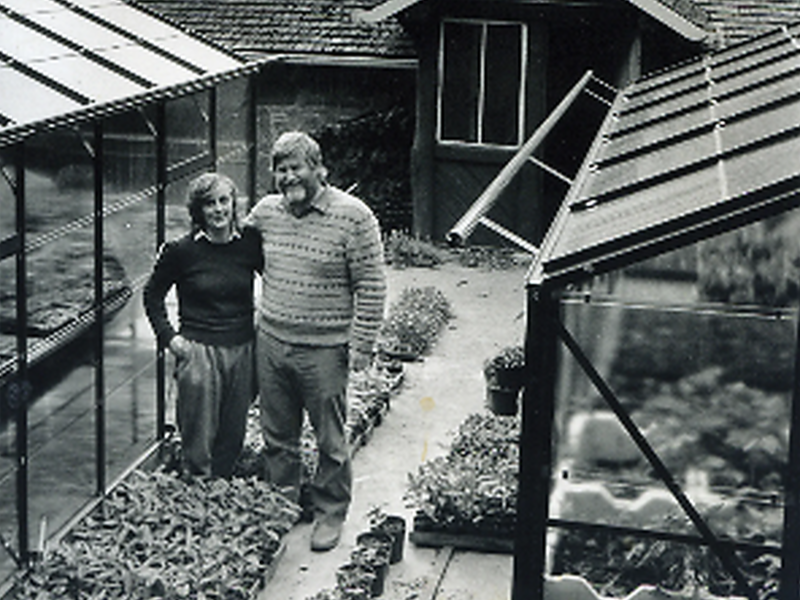
This subject was a natural choice for Hilary, after spending about 15 years trawling the heathlands with local legend Barbara Henderson, then-leader of the ANPSA’s Wallum and Coastal Heathland Study Group. “I had a lot of questions about the heath and realised no one had studied it much since the 1980s so there was an opportunity to dive in and do some study on it.” Barbara died in 2021 and Hilary now leads the study group.
Hilary’s genetic and fieldwork data supported the theory that heathlands evolved on the fringes of the ancient Gondwanan rainforests. She identified three broad groupings of heathlands on the Sunshine Coast, all with their own conservation values and issues and assemblages of species. Of particular value are the montane heaths on peaks such as the Glass House mountains area, which are ancient systems with many endemic species.
She says she is now on her “third career”: running workshops on rainforest plant identification, general botany for beginners, and on specific plant families.
“Wallum heath has pretty flowers, but the matrix is sedges, grasses and restiads, which are key groups often overlooked. In my workshops, I’m trying to extend people’s knowledge of these difficult but important plant groups. I have also discovered thatteachers have skills that are undervalued – so I’m bringing those teaching skills to these workshops and walks, to make botany accessible for local people.”
On learning about the ANPSA award, Hilary said: “It was a complete surprise … it’s quite an honour. I do think as a woman and as someone who’s had to juggle life as a single mother of a disabled person, it’s amazing when I think about it what I’ve been able to do.”
Maya Harrison has combined her love of nature with her talent for teaching to inspire many generations of young children and adults to feel at home in the great outdoors.
Most recently her influence has been felt at the Mackay Regional Botanic Gardens [MRBG], Queensland, where she worked for eight years as Visitor Services / Education Officer. “One of the things they wanted me to do at the Gardens was guided walks, so I had to learn the scientific names of plants really quickly – but I love photography and I love research, so that just worked.
“I learnt lots from other people who shared their knowledge with me, too.”
She is still involved as president of the Friends of MRBG, helping to run planting and weeding days, raise funds through ‘The Garden’s Shop’, organise school holiday activities, lead guided walks, write newsletters, create art, and assisting in the MRBG Herbarium.
Maya has just retired after 50 years of teaching, mostly in kindergartens but also in TAFEs, University, and presenting workshops at Conferences. Her teaching also extended to her hobbies, Art, SCUBA diving and ballroom dancing.
“I’ve always been interested in nature, not just plants – but creatures and insects as well; I’m still known as the bug lady here. At kindergarten we always had a nature-filled playground with lots of planting, fruit trees, animals and a digging creek we fished in.”
That led to her meeting the MRBG landscape architect Lawrence Smith AM, and working with him to design a play area at the Gardens:
“I’ve been associated with the Gardens ever since.”
Born in Brisbane, Maya started work as a kindergarten teacher in 1976 and moved to Mackay in 1990. Maya and her husband bought 115 acres of bushland in 2012 –now a Land for Wildlife property – at the base of Mount Blackwood, with two boundaries on national parks. “We’re surrounded by trees – many of which I still don ’t know, so I’m still learning.” There are several ponds and water features designed to support dragonflies, damselflies and frogs, around the home and she puts on an annual tadpole display to show MRBG visitors how to distinguish between native frogs and cane toads. Maya’s work does not end with the Gardens; she is also involved with Native Plants Queensland, Toad Busters, the Butterflies and Other Invertebrates Club, and the Network of Botanic Gardens of Australia and New Zealand (BGANZ).
In 2013 she also co-wrote a children’s book highlighting the local “Bungee Jumping Caterpillars” of the Zodiac day-flying moth, introducing several threatened local plants as the caterpillar finds its favourite food, Omphalea celata, Tree Omphalea, which is only found in three sites between Bowen and Mackay.
Maya will be unable to receive her award in person due to her commitment to Science Week events already planned at MRBG, but Lawrie Smith, who also nominated her for the honour, will travel to Mackay to present the award.
The national Plant Awards are made in conjunction with ANPSA’s Biennial Conference, held this year in Alice Springs, NT.
The presentations will be made on August 26.
All media enquiries: Miriam Ford, ANPSA President, phone 0409 600 644.
Email: anpsapresident@gmail.com.
The ANPSA (formerly known the Association of Societies for Growing Australian Plants) has been growing and promoting Australian Plants since 1957. It caters for people interested in Australia’s native flora whether that interest is simple appreciation of the beauty and diversity of the flora or whether it extends to propagation, cultivation and conservation. The Society’s activities are wide ranging and include special interest Study Groups and support of research through the Australian Flora Foundation.
For more information, please visit www.anpsa.org.au
Thank you.
Yours sincerely,
Dr Miriam Ford
President