
A good Australian native meadow needs more than native grasses and a packet of wildflower seed. It needs a repeating grassy layer, longer-lived flowering plants to carry colour through the year, and a few woody accents so the planting does not become flat.
The following plants fill those roles. Some spread and cover soil, some form clean tussocks, and others bring height, seasonal flowers and habitat value. Together they can create an informal Australian meadow that still looks intentional.
Ozbreed press release for HMA
For Immediate Release
Plants for an Australian native grassy wildflower meadow
A good Australian native meadow needs more than native grasses and a packet of wildflower seed. It needs a repeating grassy layer, longer-lived flowering plants to carry colour through the year, and a few woody accents so the planting does not become flat.
The following plants fill those roles. Some spread and cover soil, some form clean tussocks, and others bring height, seasonal flowers and habitat value. Together they can create an informal Australian meadow that still looks intentional.
Herbaceous wildflowers
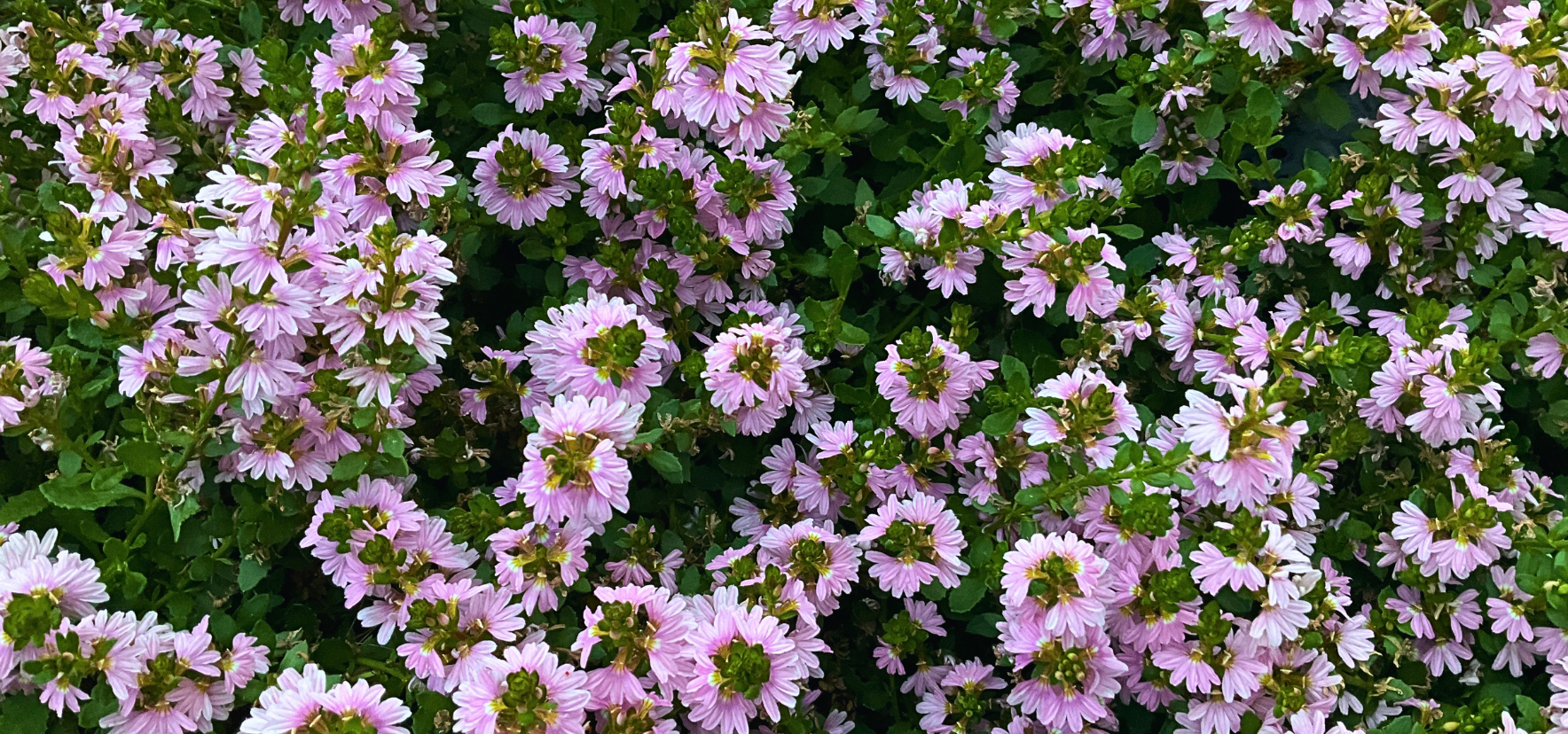
Scaevola humilis ‘PFS200’ PBR Trade Name Pink Fusion™
Some wildflowers provide a short lifespan as the price of a good flower display. Pink Fusion™ Scaevola breaks that rule. This low, rhizomatous ground cover has survived 12 years of testing, flowers for most of the year, and forms dense foliage that helps keep weeds out. Its pink fan flowers and ability to recover from difficult conditions make it a useful living mulch beneath grasses and shrubs.
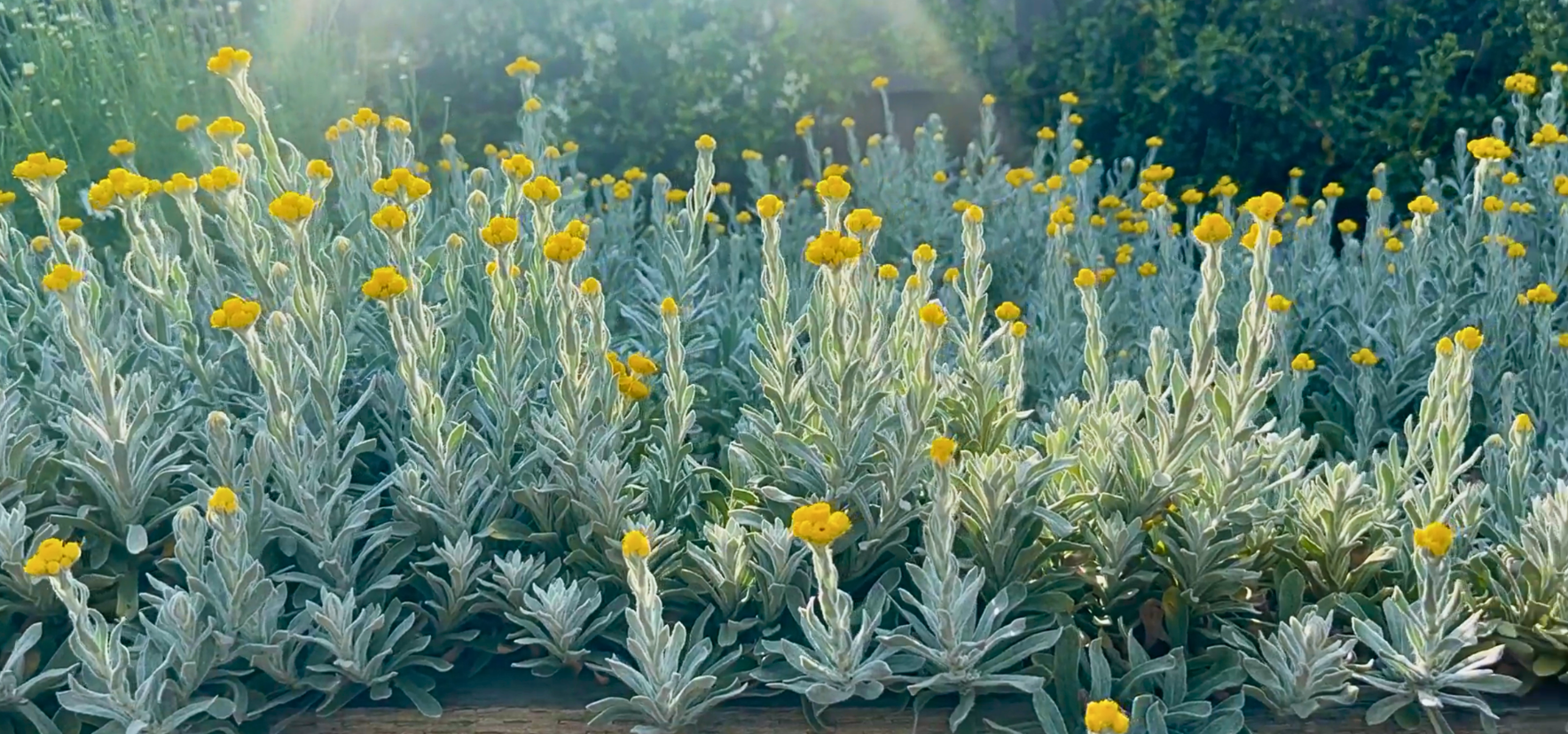
Chrysocephalum apiculatum ‘CAP07’ PBR Trade Name Aussie Reflection™
Yellow buttons are popular for an Australian wildflower look, but many forms disappear after drought, frost or prolonged stress. Aussie Reflection™ Chrysocephalum is a low, spreading form that uses stolons and rhizomes to recover when conditions improve. Its yellow flowers sit naturally among low grasses, providing a resilient wildflower layer for meadow and biodiversity planting.
Strappy and grassy plants
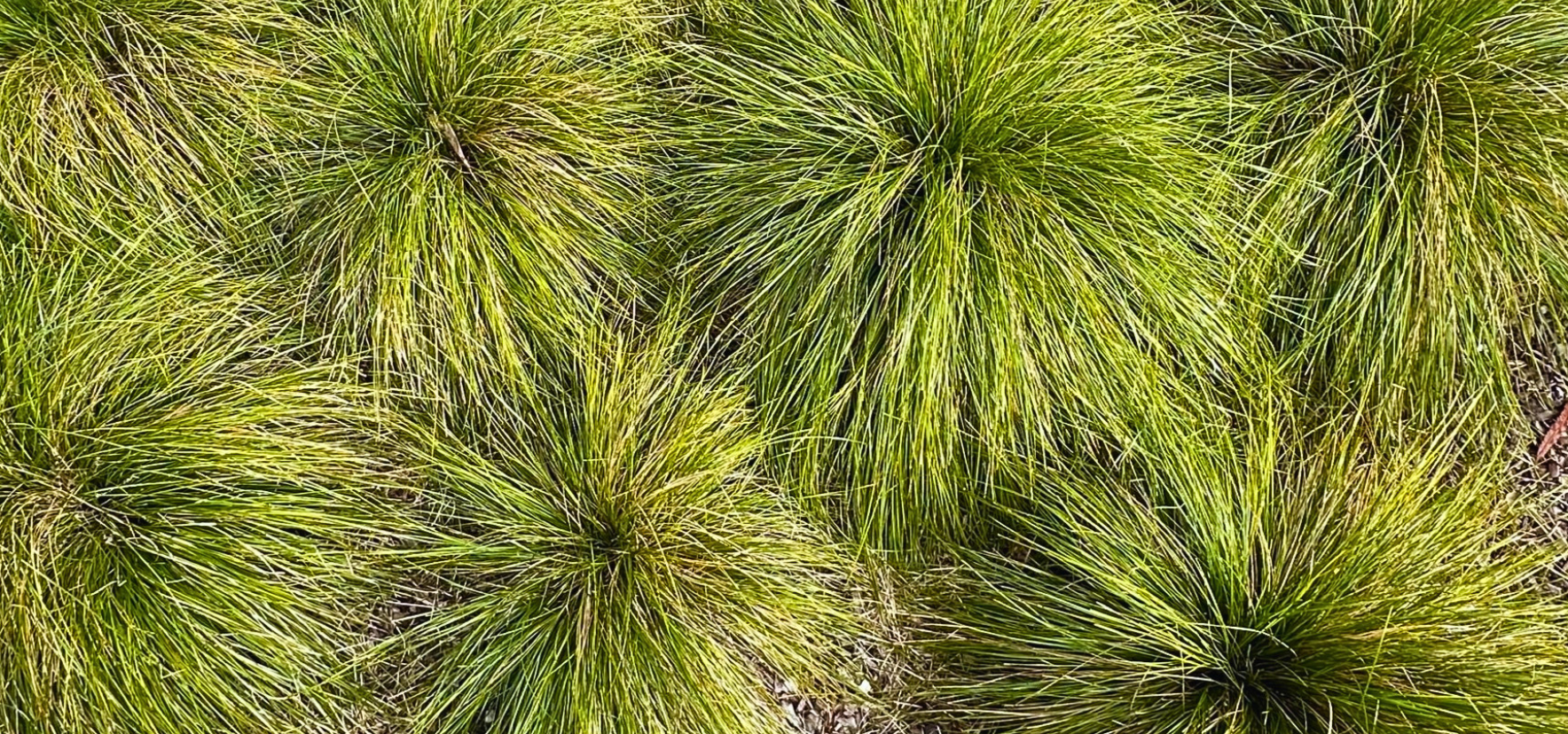
Lomandra longifolia ‘LM360’ PBR Trade Name Lady Tanika®
Not every part of a meadow has the same soil moisture. Lady Tanika® Lomandra forms a compact, cascading tuft of fine green leaves and copes with wet conditions as well as drought and heavy frost. This female form is highly disease-resistant, does not attract ants and produces self-cleaning flowers, making it a dependable grassy-looking accent around swales, drainage lines, paths and boundaries.
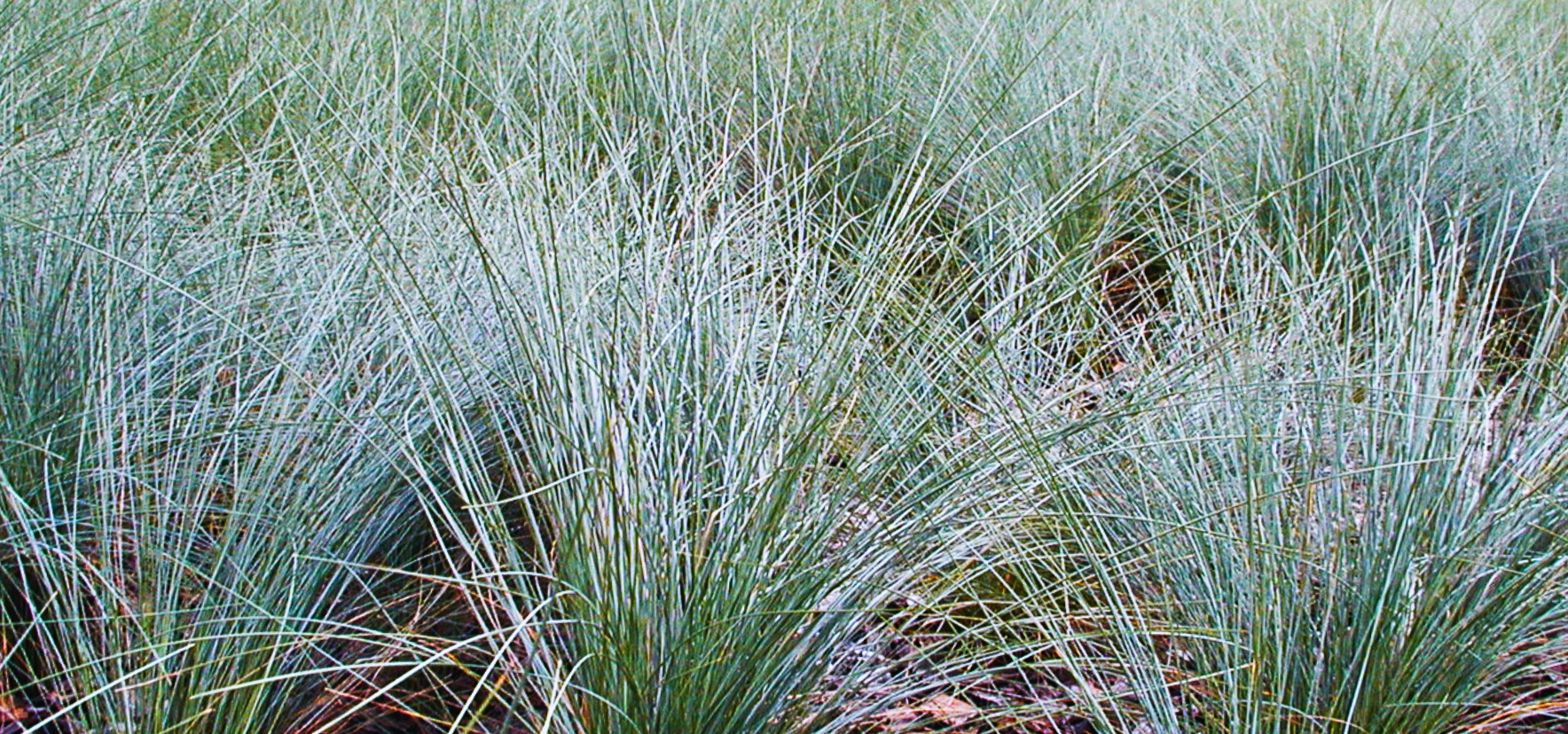
Poa poiformis ‘PP500’ Trade Name Kingsdale™
Kingsdale™ Poa brings vivid blue, arching foliage into the grass layer. Its compact tussocks can be repeated through the foreground and middle of a planting, adding softness without turning into a tall wall of foliage. It also performs well on slopes requiring erosion control and tolerates exposed, coastal, frosty and dry conditions.
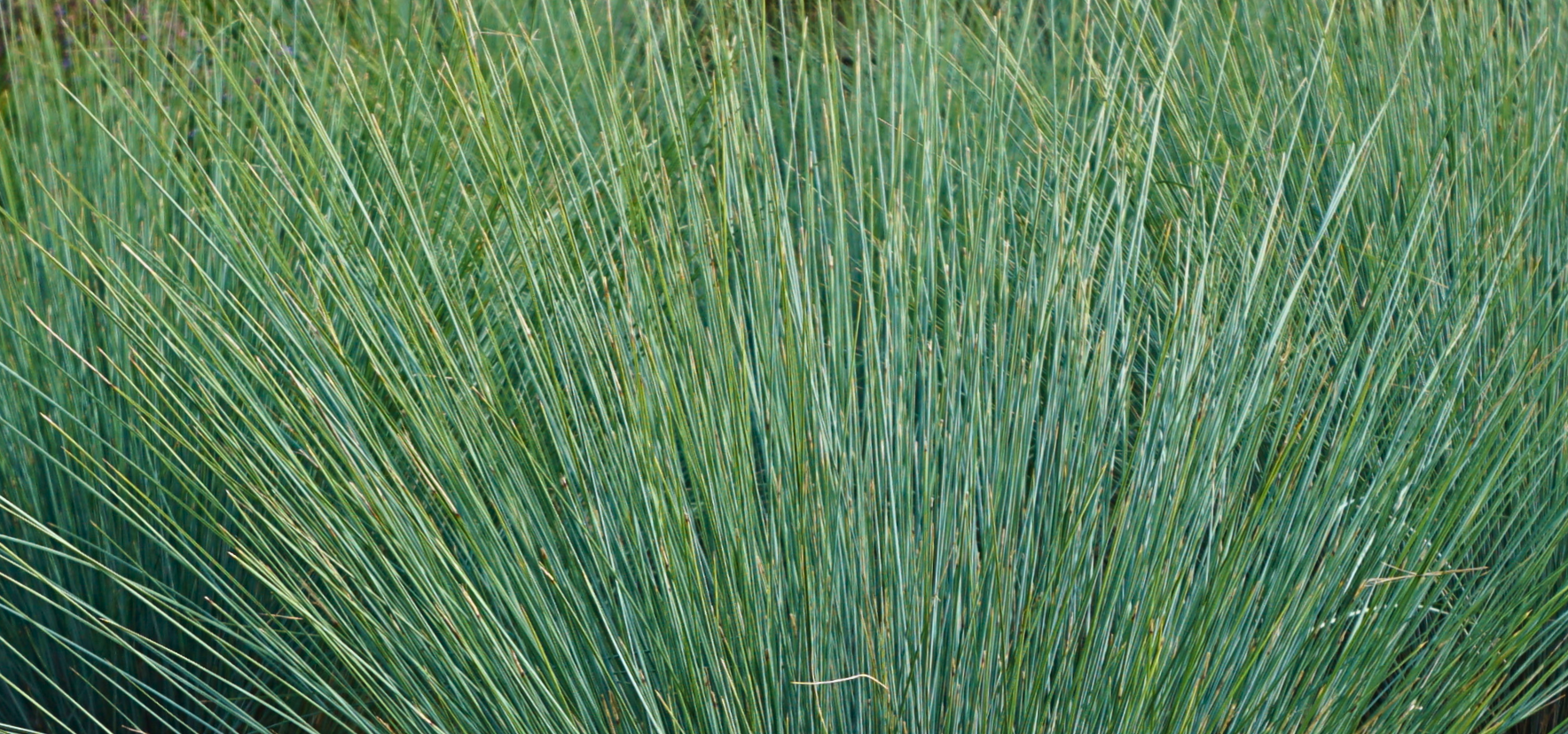
Poa spp. ‘POL12’ PBR Trade Name Eskdale Blue™
Eskdale Blue™ Poa is the fast-establishing option when the meadow needs to look mature sooner. Its deep blue tussocks quickly form a strong grassy matrix, and dense planting helps close over the soil and compete with weeds. It tolerates drought, frost and very wet conditions, while browning less than many Poas.
Woody shrubs
A native meadow can include woody shrubs, used as accents rather than clipped into a hedge. Low, open and fine-leaved forms stop the planting from becoming one-dimensional and extend the flowering season.
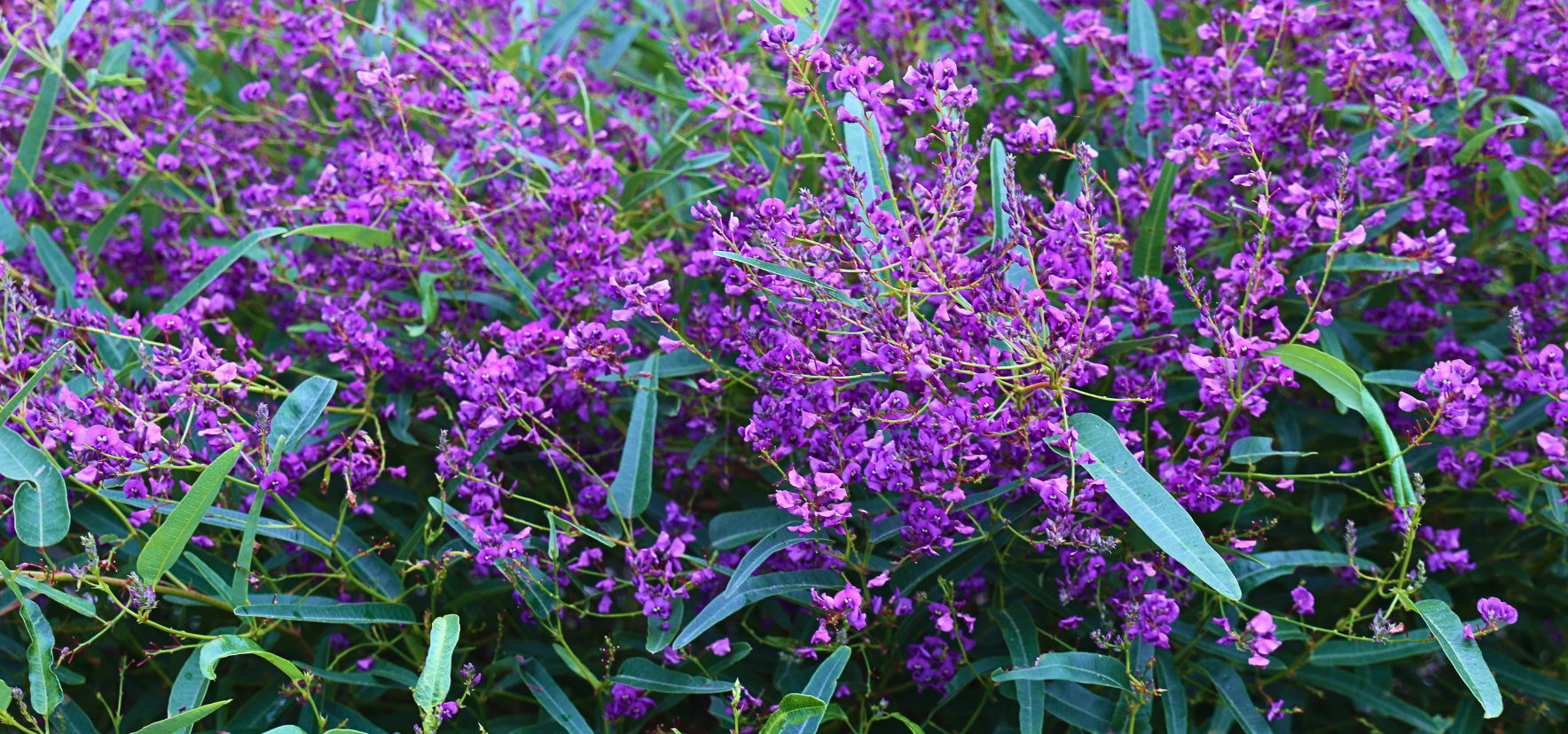
Hardenbergia violacea ‘HB1’ PBR Trade Name Meema™
Meema™ Hardenbergia is a broad, low shrubby ground cover that can connect isolated grasses and wildflowers into a more continuous planting. It maintains crisp foliage through cold winters and hot, dry winds, tolerates a wide range of soils and carries masses of purple flowers from winter into early spring.
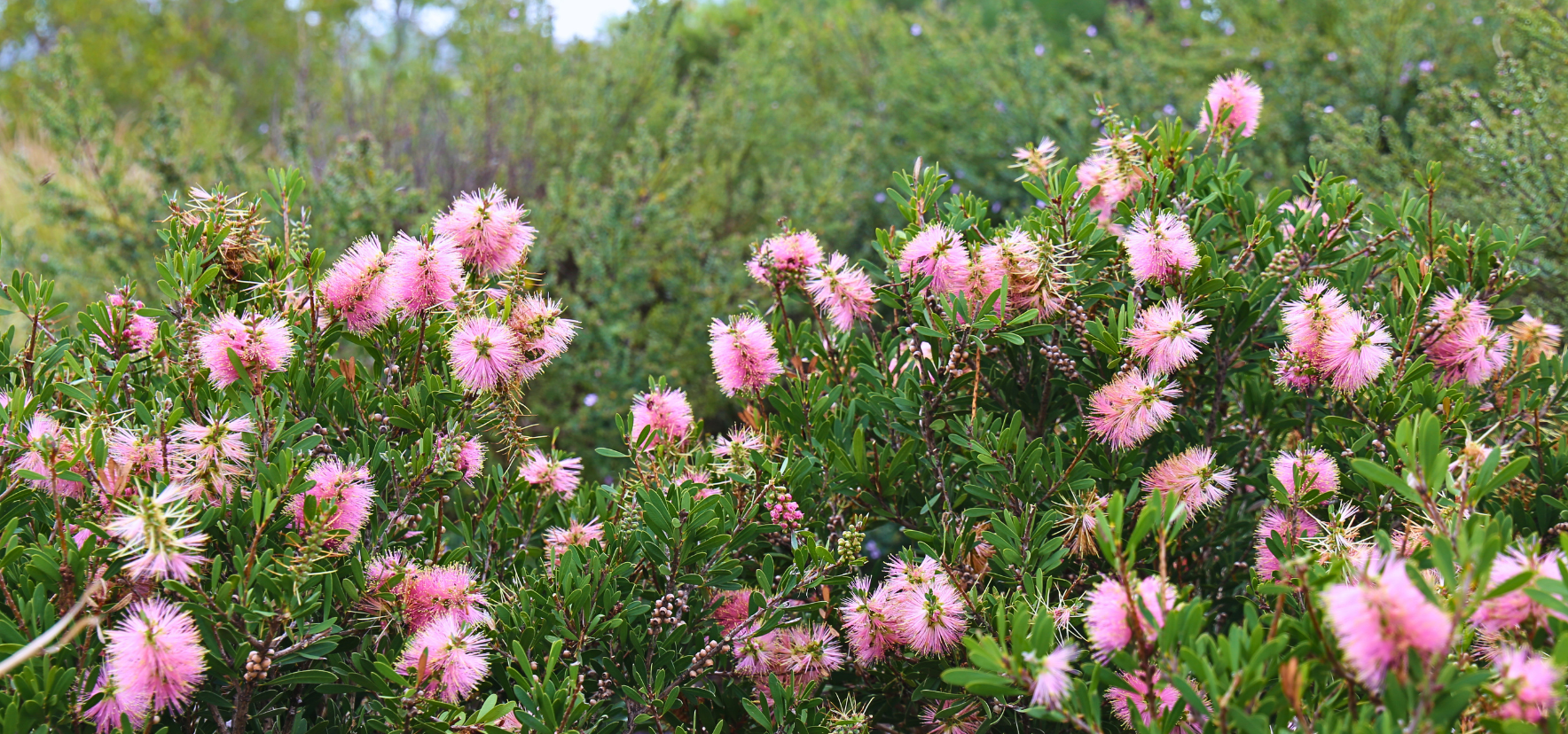
Callistemon spp. ‘CNU15’ PBR Trade Name Sweet Burst™
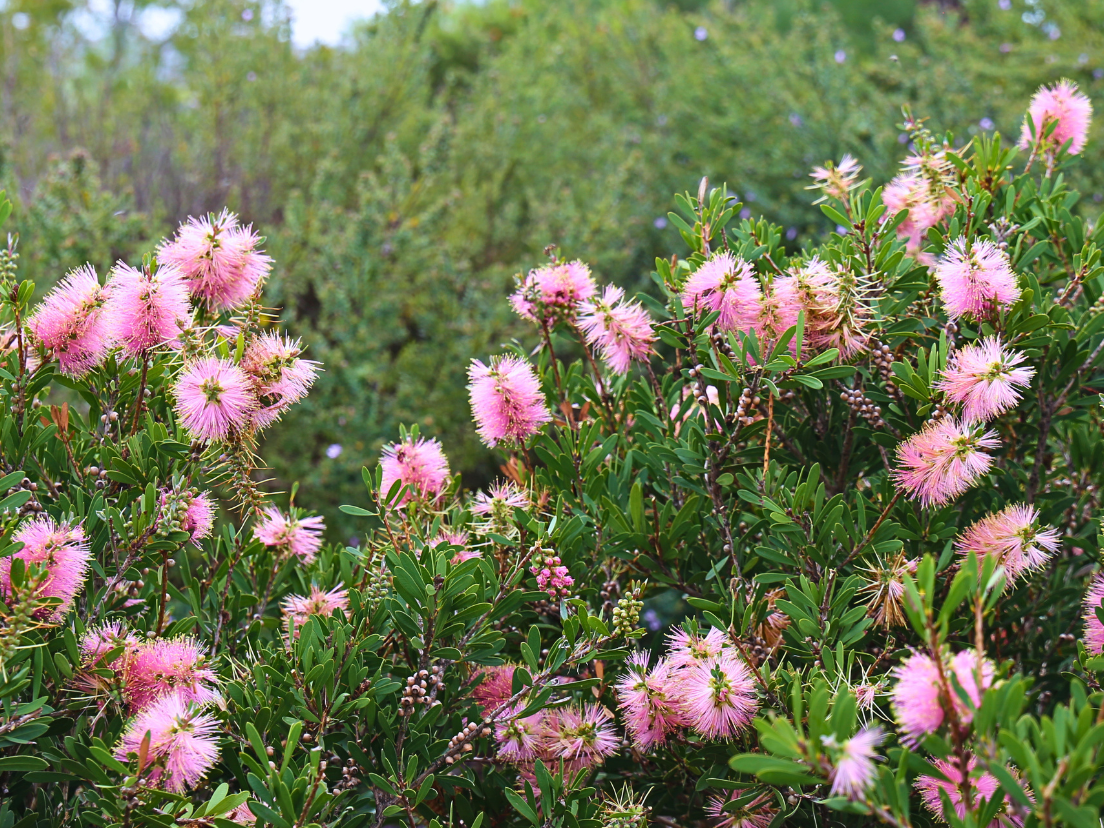
Sweet Burst™ Callistemon is a semi-compact, fine-leaved shrub with masses of soft baby-pink flowers in spring. Used occasionally rather than in a continuous row, it rises out of the grass layer as a flowering accent and provides a useful resource for bees and native birds.
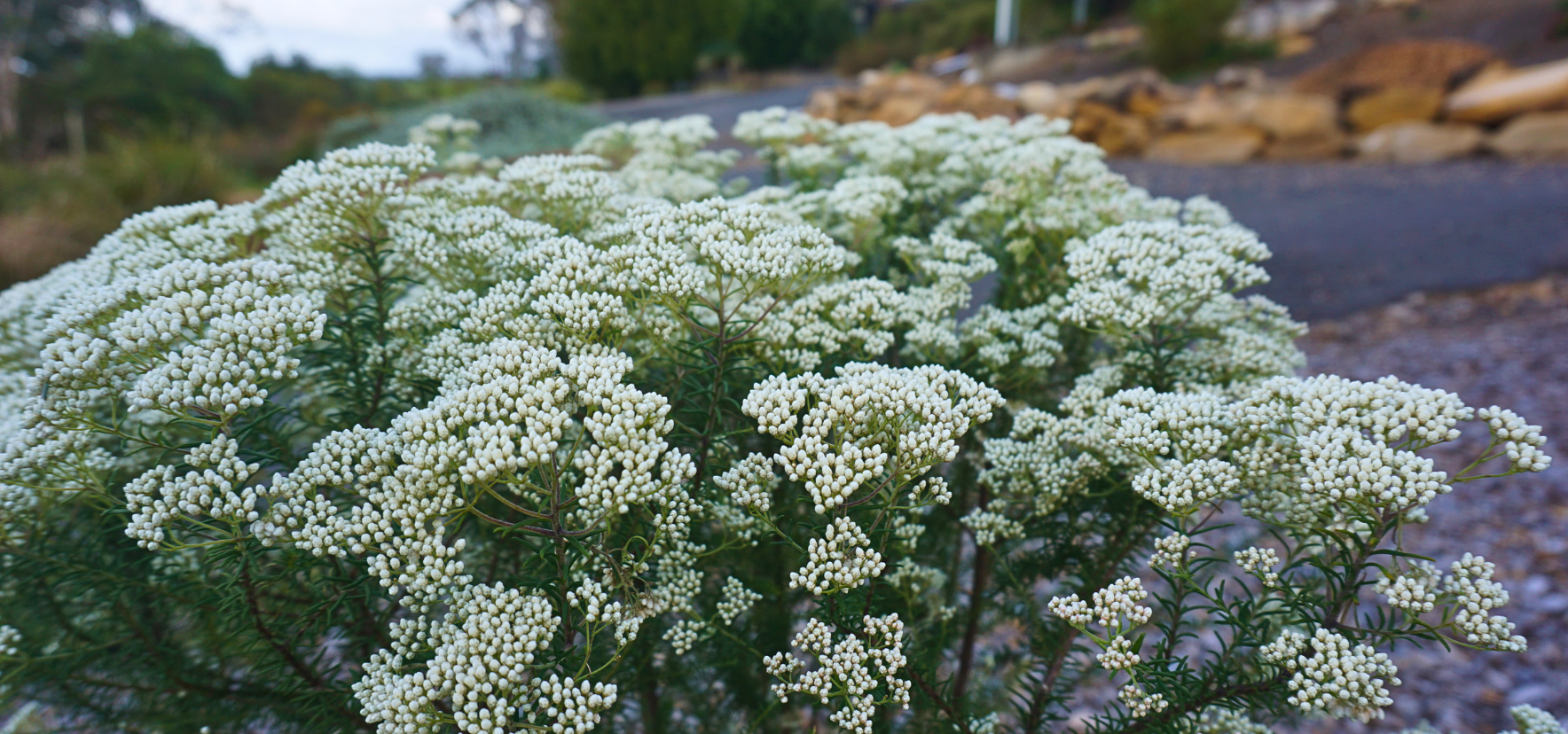
Ozothamnus diosmifolius ‘Ozdi01’ PBR Intended Trade Name White Horse™
White Horse™ Ozothamnus brings a taller vertical layer without becoming a tree-like backdrop. Its clean, feathery foliage forms a naturally dense upright shrub, while masses of papery white flowers create a soft display for months and provide strong pollinator support.
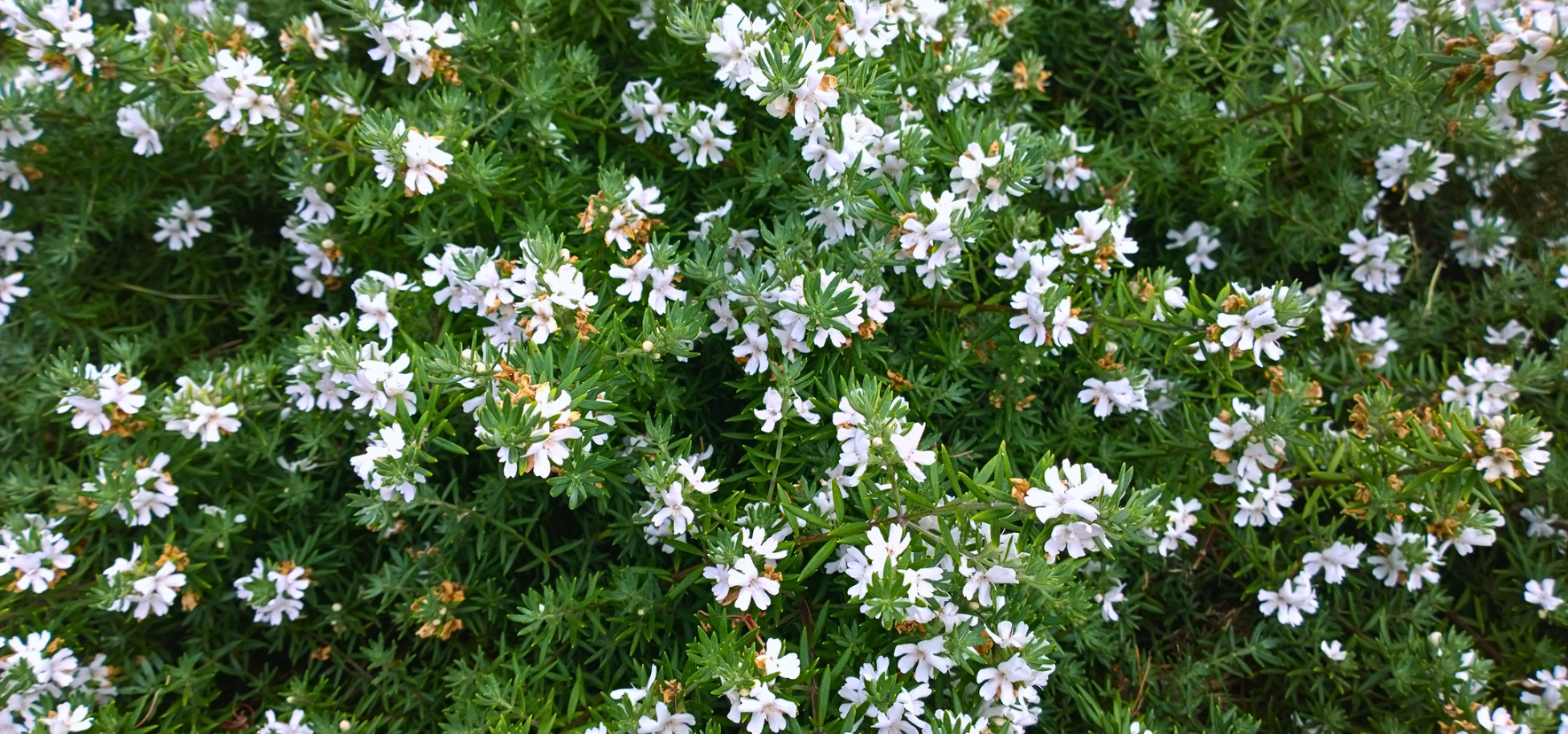
Westringia fruticosa ‘WES06’ PBR Trade Name Low Horizon™
Low Horizon™ Westringia sits at the opposite end of the woody layer. Its short internodes and flat habit produce a dense, ultra-compact ground cover that fits along a meadow edge or between larger tussocks. Its restrained form provides permanent low structure without turning the whole composition into a clipped border.
There is no single formula for an Australian native grassy wildflower meadow. As a starting point, repeat the grasses and strappy plants, weave the herbaceous wildflowers through the gaps, and use the woody shrubs in smaller numbers to mark changes in height and season.
Look out for these plants at your local nursery and use them to create a native grassy wildflower meadow of your own. It can be informal without being careless, and colourful without depending on one brief flowering window.
See our new cultivated plant palettes at https://www.ozbreed.com.au/plant-palettes/
About Ozbreed
Ozbreed is Australia’s leading plant breeder, focused on high performing plants for functional Australian landscapes. Plants are tested against heat, frost, humidity, drought, flooding, pests and diseases at Ozbreed’s farm in Richmond, NSW. Only the strongest performers join the Ozbreed collection.
For media interviews and high-res images contact Dan Fuller at horticulture@ozbreed.com.au


