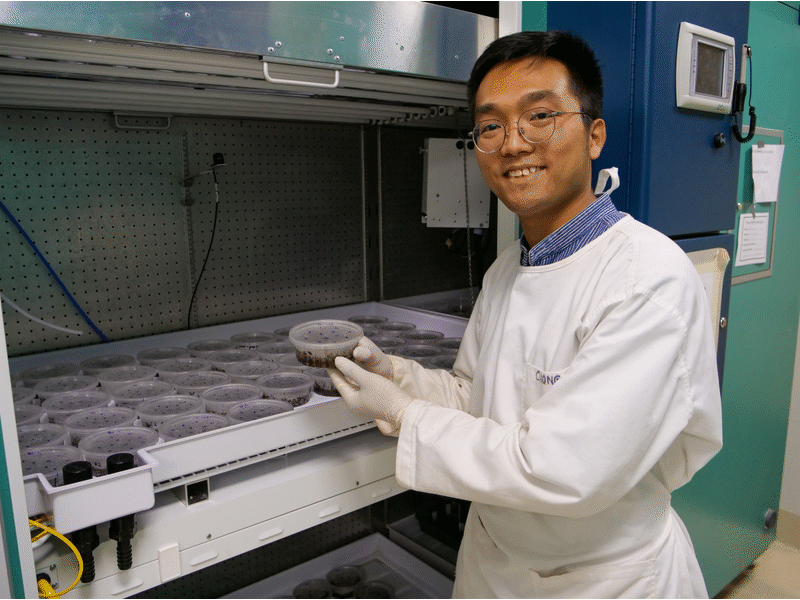
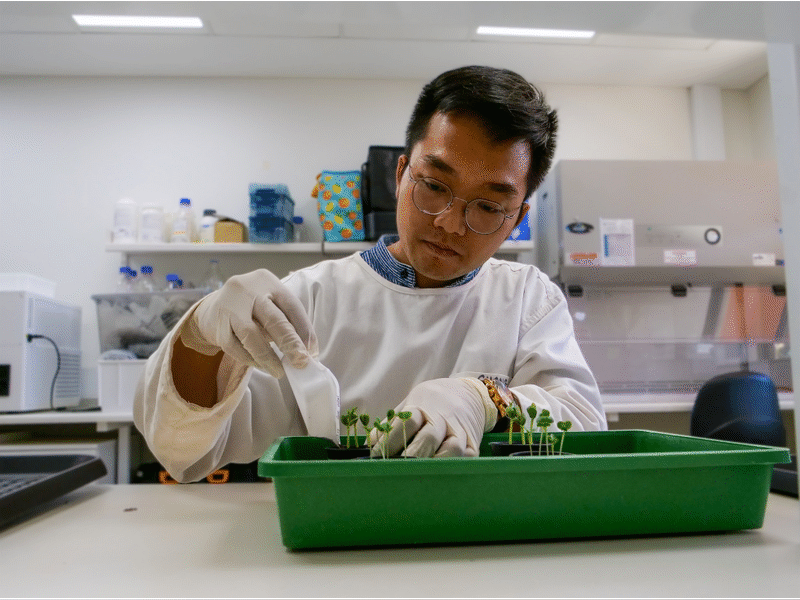
Curtin University researchers have discovered some agricultural soils can naturally suppress one of Australia’s most damaging broadacre crop diseases.
The research, published in the international journal Applied Soil Ecology, found some soils can inhibit infection and survival of Sclerotinia sclerotiorum — the fungus responsible for Sclerotinia stem rot, a disease that causes significant yield losses in broadacre crops such as canola and pulses.
Lead author Dr Viet-Cuong Han, from the Centre for Crop and Disease Management, said the study highlights the role of soil as a living biological system, rather than a passive growing medium.
“We identified a soil that naturally suppresses Sclerotinia by preventing the fungus from infecting plants and by inhibiting germination of its survival structures in the soil,” Dr Han said.