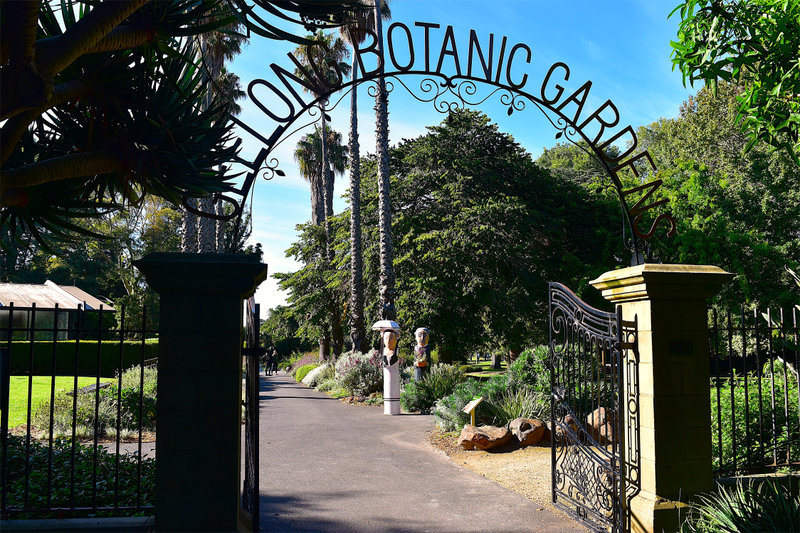
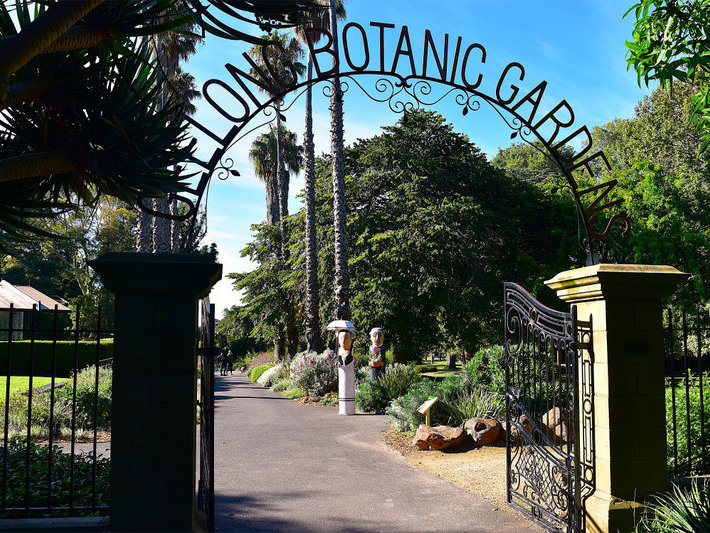
Gail Thomas reports on the celebration of the Geelong Botanic Gardens’ 175th anniversary and outlines the stories behind the bollards at the Hansen Gates entrance to the Gardens. Photos Gail Thomas.
On 10 April, 1851 the government of the time legislated the establishment of what is now known as the Geelong Botanic Gardens. Eastern Hill, the exposed 80-hectare site with bay frontage and little vegetation, saw a committee of management being appointed in 1852. Over the years the area was transformed to become Eastern Park and the Geelong Botanic Gardens, recognised as an important cultural destination for its impressive tree collection and avenues that are listed on the Victorian Heritage Register.
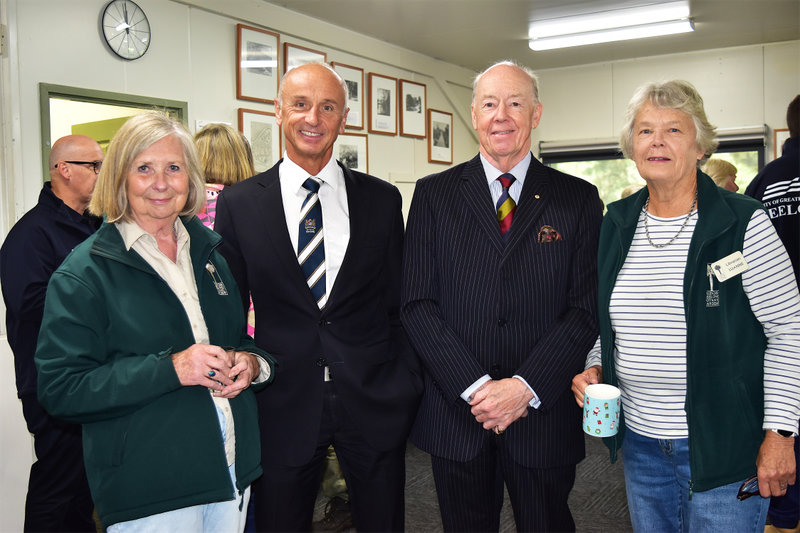
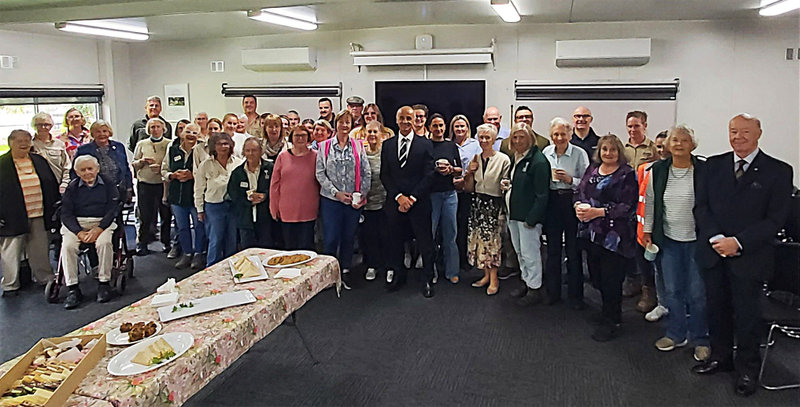
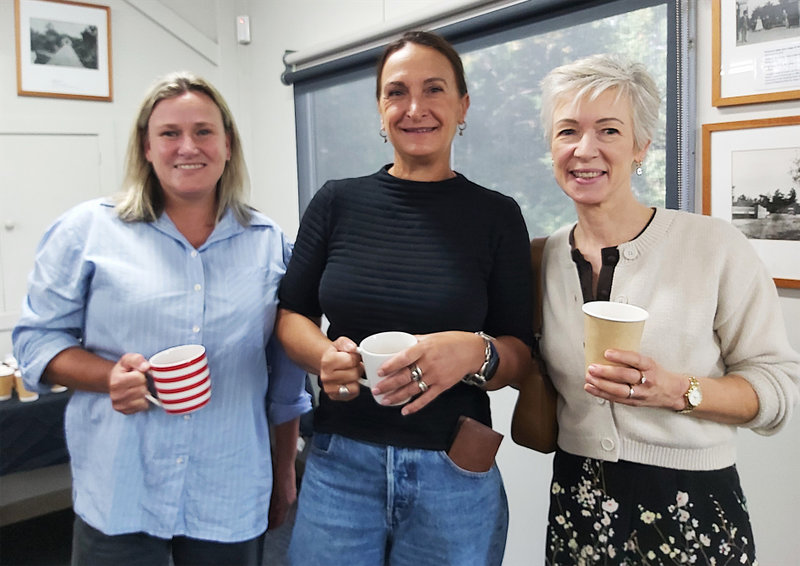
The Friends of the Geelong Botanic Gardens recently commemorated this 175th anniversary day on-site with a morning tea attended by City of Greater Geelong Mayor Stretch Kontelj, Councillor Rowan D Story, Botanic Gardens staff and Friends of the Gardens.
The bollards
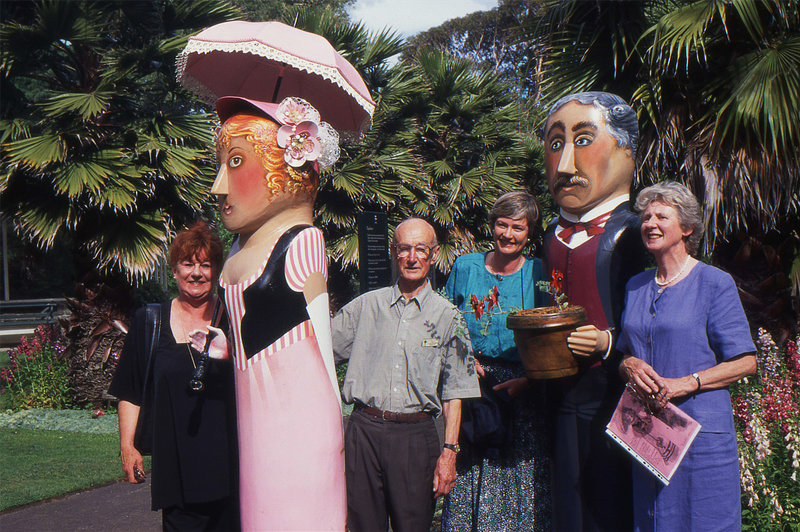
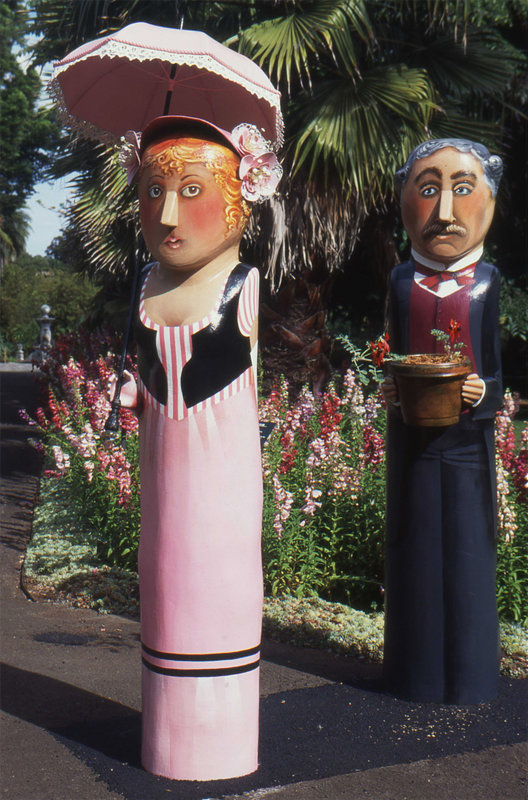
The first curator of the Gardens was Daniel Bunce, who was appointed in 1857. He carried out extensive plantings and has been commemorated with a bollard adjacent to the Hansen Gates. Beside him is a bollard of a young lady holding a parasol.
Thanks to the late George Jones, who was a life member of HMAA and a local historian we can tell the story behind these bollards. George documented the history of the Geelong Botanic Gardens in his book Growing Together and with two further supplementary volumes.
To recognise the contribution George made to horticulture, and to celebrate his 80th birthday in 1999, The Friends of the Botanic Gardens raised funds by public donation for the two ‘Bunce Bollards’ created by local artist the late Jan Mitchell, famous for her Baywalk Bollards that line the Geelong foreshore.
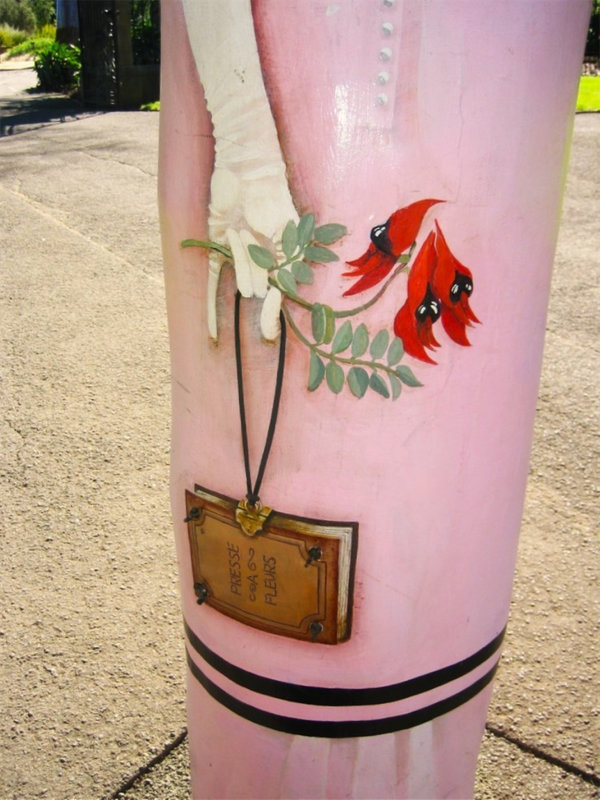
Jan researched her subjects thoroughly when creating the bollards, tapping into the story documented by George of how young women of the day were avid collectors of blooms for their flower presses. The Gardens became a popular destination for a spot of ‘pruning’ special and sought-after plants for pressed flower collections.
By the serious look on bollard Daniel Bunce’s face, it was obvious he had caught this young lady in the act, as her bollard has been painted with her holding a flower press and a sprig of Sturt’s Desert pea behind her back!
Hooped petticoats, a popular attire of the day, were a good place for secreting the stolen plants. To combat the theft, the wife of the lodge keeper was delegated to check the skirts of visitors leaving the Gardens. The Argus reported that she intercepted a number of thefts in this manner. George’s research also uncovered the story of a couple who, in September 1862, were seen to uproot tulip bulbs and a number of other plants.
Our female bollard was likely modelled on Mary Sibley who, in 1871 as reported in the Geelong Advertiser, had been caught by gardener John Reeve “picking flowers in the Gardens”. A fine of five shillings and five shillings costs was imposed; the Bench hinting “that persons picking flowers in the Gardens, rendered themselves liable to six months imprisonment”.
While the Friends of today contribute to promoting the Gardens, telling the story of the bollards, conducting walks, hosting events and welcoming visitors, it is not in their job description to be ‘frisking for flowers’!