
Noteworthy
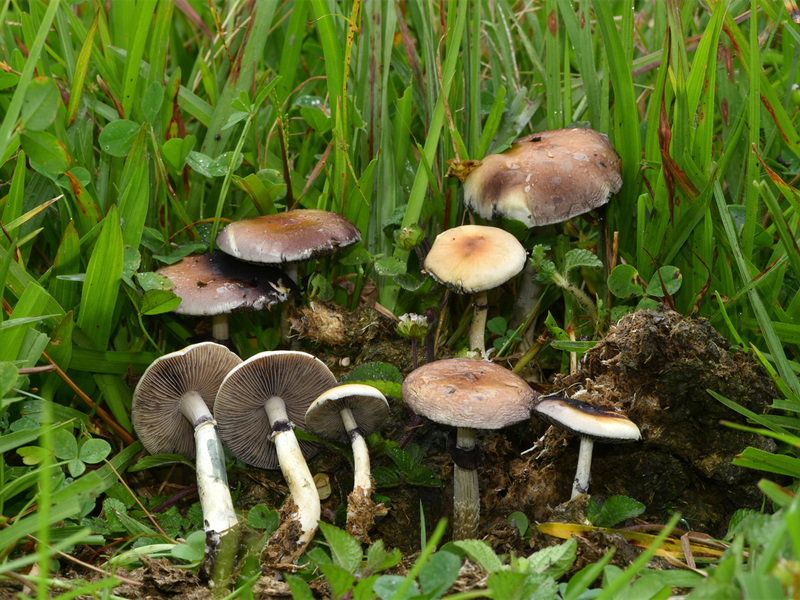
Magic mushrooms are experiencing a resurgence in popularity. Historically valued for their psychoactive properties, psilocybin–containing mushrooms are now studied as potential alternative treatments for depression, anxiety, post-traumatic stress disorder (PTSD), and addiction. The best-known psychedelic mushrooms is Psilocybe cubensis, which is grown worldwide for recreational and medicinal purposes.
But the origin of this mushroom is an enigma. Did it originate in Africa and was then inadvertently introduced in the American continent with cattle in the 1500s? Newly published findings suggest otherwise.
A group of scientists from the US and Africa collected samples of mushrooms resembling P. cubensis in Zimbabwe and South Africa. Using analysis of conserved genetic loci, they compared these samples with known type specimens. They found that the samples from Africa corresponded to a different, newly discovered, species, Psilocybe ochraceocentrata, which diverged from P. cubensis about 1.5 million years ago. Both of these species rely on dung for spore dispersal, a trait likely inherited from their common ancestor. This new scenario suggests that a split into separate lineages occurred long before cattle domestication, likely due to a rare founder event that established P. cubensis in the Americas, followed by geographical isolation.
In addition to uncovering information on the origin of domesticated P. cubensis, this new study provides novel genetic resources for research on psychedelic mushrooms.