We like to share news and information with members of HMAA, particularly details of new research and resources for horticulture. Usually, the media release is posted on our website without comment. The following media release however raised a few questions among the HMAA members who received it. Of particular concern was the listing of two weedy or potential weedy trees as well as an old plant name in the following list of recommended plantings.
- Ash (Fraxinus griffithii) a medium-sized deciduous tree with rounded canopy.
- Brush box (Tristania conferta), a dense evergreen species with a dome-shaped, uniform canopy.
- Yellow wood (Podocarpus elongatus), a compact evergreen species with a narrow, upright canopy.
- Queen palm (Syagrus romanzoffiana) a tall palm species with a slender trunk, characterised by a fan-shaped canopy which performs well in Brisbane’s subtropical climate. All four species were selected to bring a mix of canopy shapes and cooling functions.
Concerned about some of the plant descriptions and recommendations (listed above), Helen Young contacted the media department at the Queensland University of Technology (QUT), and her queries were passed on to lead researcher Abdulrazzaq Shaamala, who sent the following response.
“Dear Helen,
Thank you for taking the time to read the media release and for sharing your concerns. I appreciate your careful attention to detail.
I would like to clarify that the species listed in the article are those used within the modelling framework of the published, peer-reviewed study. They were selected from the tropical library of the simulation software because they represent different canopy geometries and structural forms, which influence shading behaviour and thermal performance within the model.
The study evaluates microclimatic performance under controlled simulation conditions. It does not constitute a regulatory planting recommendation, nor does it override local weed classifications or planning guidelines.
For Fraxinus griffithii, the description follows the parameterisation in the modelling dataset to ensure internal consistency and reproducibility. As you know, horticultural terminology can vary slightly between regions.
I hope this clarifies the context of the media release. Thank you again for engaging thoughtfully with the work.
Best wishes,
Abdul”
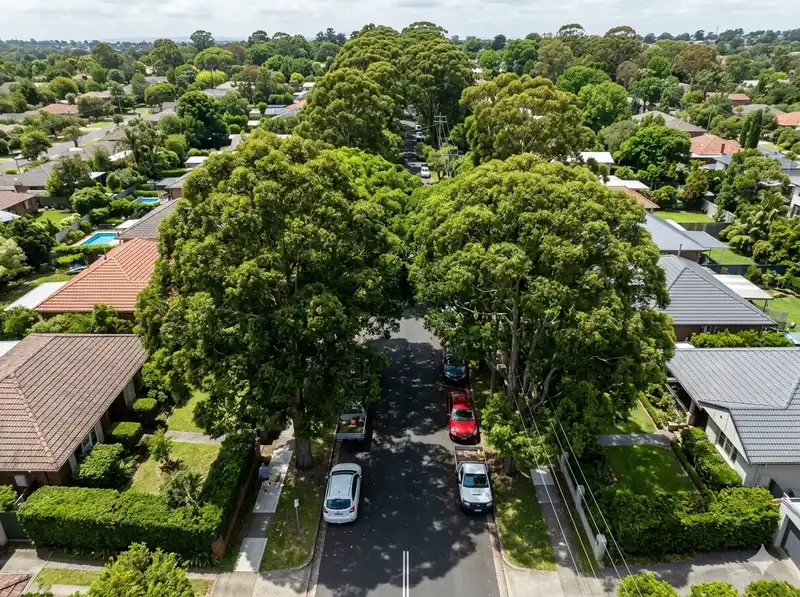
With these concerns and comments in mind, here is the link to the media release, ‘New AI tool optimises tree species and planting for cooling urban streets’, on the QUT website that outlines important research and the use of AI technology around the use of plants to cool urban environments . The team’s study has been published in ‘Cities’ as Algorithmic urban greening for thermal resilience: AI-optimised tree placement and species selection.